
RV & Motorhome Detailing on Long Island: What's Different from a Car
Quick answer
RV and motorhome detailing on Long Island is a different job from a car detail — the fiberglass sidewalls oxidize the same way a boat hull does, the rubber or TPO roof needs a dedicated cleaner that won't strip the UV coating, and the slide-out seals fail early if they aren't conditioned every season. A proper RV detail combines auto-detailing technique (compounding, polishing, sealing) with marine-grade products and roof-specific chemistry, plus mechanical work on awnings, slide seals, and decals. Done once a year before storage and once before the first trip, it preserves resale value and prevents the slow leaks that turn into framework damage.
By Al Alvarez
Owner & master detailer · 6+ years on Long Island
Long Island RVs and motorhomes take a beating most owners underestimate. They sit outside through coastal winters, get driven into salt air on every trip out East, and rarely see a detail between the day they’re delivered and the day they’re traded in. By the time the owner notices the sidewalls have gone chalky and the roof seams are pulling away, the fix has gotten expensive.
This post is about why RV detailing is a different job from a car detail, what a proper service actually covers, and the timing that protects the unit through Long Island’s seasons. Our RV detailing service is set up around exactly this.
Why an RV isn’t just a big car
The surface is fundamentally different. Car panels are metal with a clear-coated paint system — designed to be washed and waxed weekly with mild shampoos. Motorhome sidewalls are pigmented fiberglass with a gel coat, the same construction used on boat hulls. That means they oxidize the same way: UV breaks the gel coat down, the surface goes chalky, and standard car wax sits on top of the damage without fixing it.
The roof is the bigger problem. Most Class A, Class C, and travel trailer roofs are EPDM rubber or TPO membrane — soft, porous, and topped with a UV-protective coating. Hit that with a typical car-wash detergent and the coating starts to dissolve. The roof then ages faster, develops chalk transfer (the black streaks that run down every sidewall), and reaches end-of-life years sooner than it should.
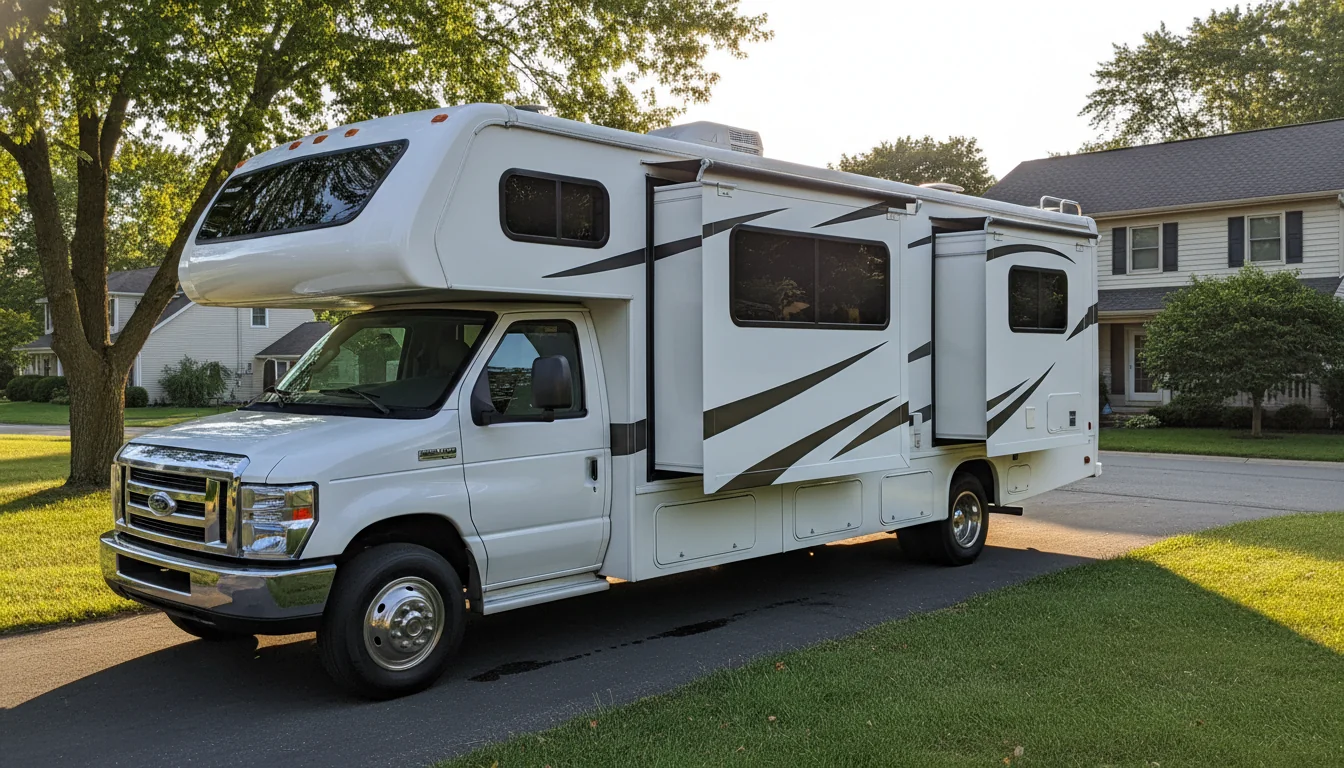
Add in the moving parts a car doesn’t have — power awnings, slide-outs with rubber seals, exterior storage compartments, holding-tank exteriors, decal-covered fiberglass — and the detail becomes a different job. The Recreation Vehicle Industry Association tracks roughly 11 million RV households nationally, and the most common premature-replacement cause they cite isn’t mechanical failure — it’s exterior and roof damage from neglected maintenance.
What a full RV detail covers
Our standard process, run start to finish:
- Roof first. Walk the roof, identify any damaged sealant, photograph for the owner. Then a soft-bristle wash with a dedicated rubber/TPO cleaner — never car shampoo. Rinse thoroughly and check sealant joints at every penetration: vents, AC units, refrigerator vent, antenna, front and rear cap seams.
- Sidewall wash. pH-balanced exterior wash, two-bucket method, lambswool mitt. Black streaks from roof runoff get a dedicated streak remover before they’re agitated — scrubbing dry streaks grinds them into the gel coat.
- Oxidation removal if needed. Fiberglass that’s gone chalky gets a marine-grade compound and polish, same process used for boat gel coat. The level of compounding is matched to the severity — light oxidation polishes out in one pass, heavy chalking takes a multi-stage cut.
- Decal protection. Older decals get brittle and lift at the edges. We work around them carefully and apply a UV-protective sealant — aggressive compounding will tear them.
- Sealant application. SiO₂-based marine sealant over the gel coat for UV protection that lasts a full season. Roof gets its own protectant designed for the membrane material.
- Slide-out seals. Each slide pulled out, seals wiped down, conditioned with a non-petroleum rubber dressing. Cracked seals are flagged with photos for the owner.
- Awnings. Awning fabric extended, brushed with awning-specific cleaner, rinsed, dried before retraction. Mildew under a stored awning is one of the most common issues we find.
- Wheel wells, storage bays, propane area. Detail wash and dry on the often-skipped zones.
- Interior if requested. Carpet steam extraction, upholstery shampoo, vent steam clean, leather conditioning where applicable. Same equipment used for our full car detail, scaled up.
A full exterior on a 30-foot Class C runs most of a day. A 40-foot Class A with heavy oxidation can run two.
Seasonal timing matters more here than on a car
Cars get driven year-round and washed when they’re visibly dirty. RVs sit. That changes the calculus.
The pattern that works on Long Island:
- Pre-season (April or May). Wash, polish if needed, seal, slide seals conditioned, awning cleaned. Unit is ready for the first trip out East.
- Mid-season (July, optional). Wash and re-seal for high-mileage owners or anyone who took a beach trip and brought salt back.
- Pre-storage (October or November). This is the one most owners skip and the one that matters most. Roof cleaned and sealed, sidewalls washed and sealed, slide seals conditioned, awning cleaned and dried before retraction, interior dehumidified. The unit goes into storage protected and comes out in spring needing only a wash.
Owners who skip the fall service spend the winter with salt and contaminants slowly degrading the gel coat and seams. Spring then becomes a full restoration instead of a wash — and the cumulative cost over the unit’s life is much higher. The same logic we cover in winter car care for Long Island applies double to anything stored outside.
Where RVs live on Long Island and why it matters
RV owners on the East End run into salt air the same way boat owners do — drive Sunrise Highway out past Westhampton with the windows down on a humid day and the unit picks up a coating of salt-laden air that settles on every surface. Owners storing units in Riverhead, Calverton, or on personal lots in Sag Harbor, East Hampton, and Montauk see accelerated oxidation compared to indoor-stored units in Nassau County. The detail schedule should reflect that. Our fleet detailing service handles multi-unit RV rental operations on the same logic.
What we look for that owners miss
A few things we flag on almost every first-time RV detail:
- Roof sealant cracking at the front cap seam. Number-one source of interior water damage.
- Slide seal dry rot at the corners. Cheap to prevent, expensive to fix.
- Black streak etching on sidewalls below the roof drip line. The longer streaks sit, the deeper they etch.
- Awning fabric mildew from a damp retraction in fall.
- Decal lifting at corners and edges — fixable early, not fixable late.
We document each with photos so the owner can decide whether to handle a repair before the next trip or schedule it with whoever services the unit mechanically.
Booking
We detail RVs across Nassau and Suffolk year-round — Class A, Class C, travel trailers, fifth wheels, and toy haulers. Storage-lot service available with advance notice. For a quote, text photos of the sidewalls, roof if you can reach it, and the unit’s year/make/length to (631) 559-9235, or use the form at /contact and we’ll get back to you the same day.